Making, parading, hanging and burning effigies is a form of public political display deeply rooted in traditional practices, holiday celebrations, and ritual. The work maps the intertwined genealogies of the protest practice in two countries – the United Kingdom and Egypt – and shows on these examples, how the practice easily moves between tradition and politics: how it is sometimes staged as protest in political conflicts, how it can turn into a tradition to commemorate the struggle, and how it can be reactivated from social memory in times of renewed crises.
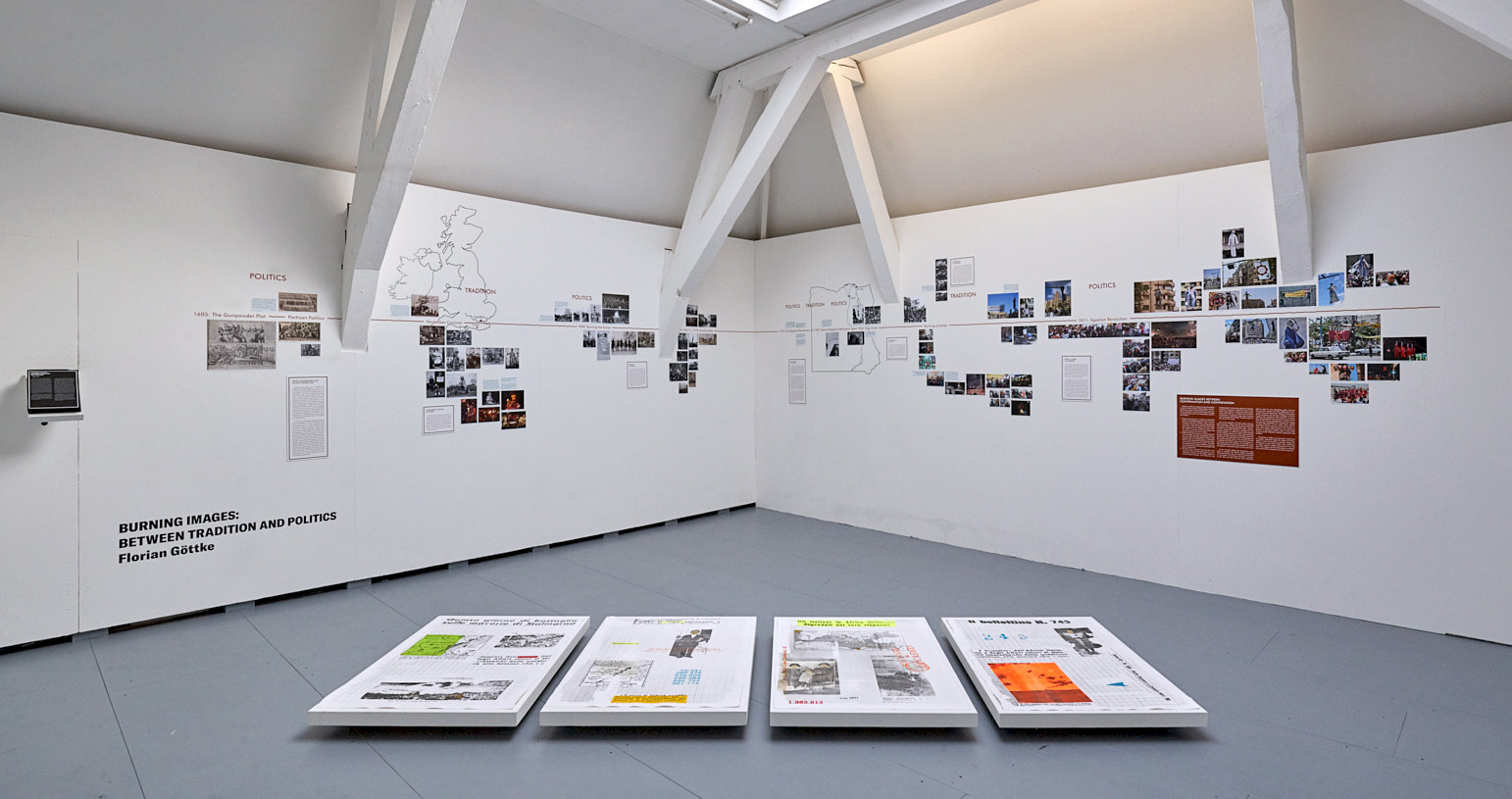
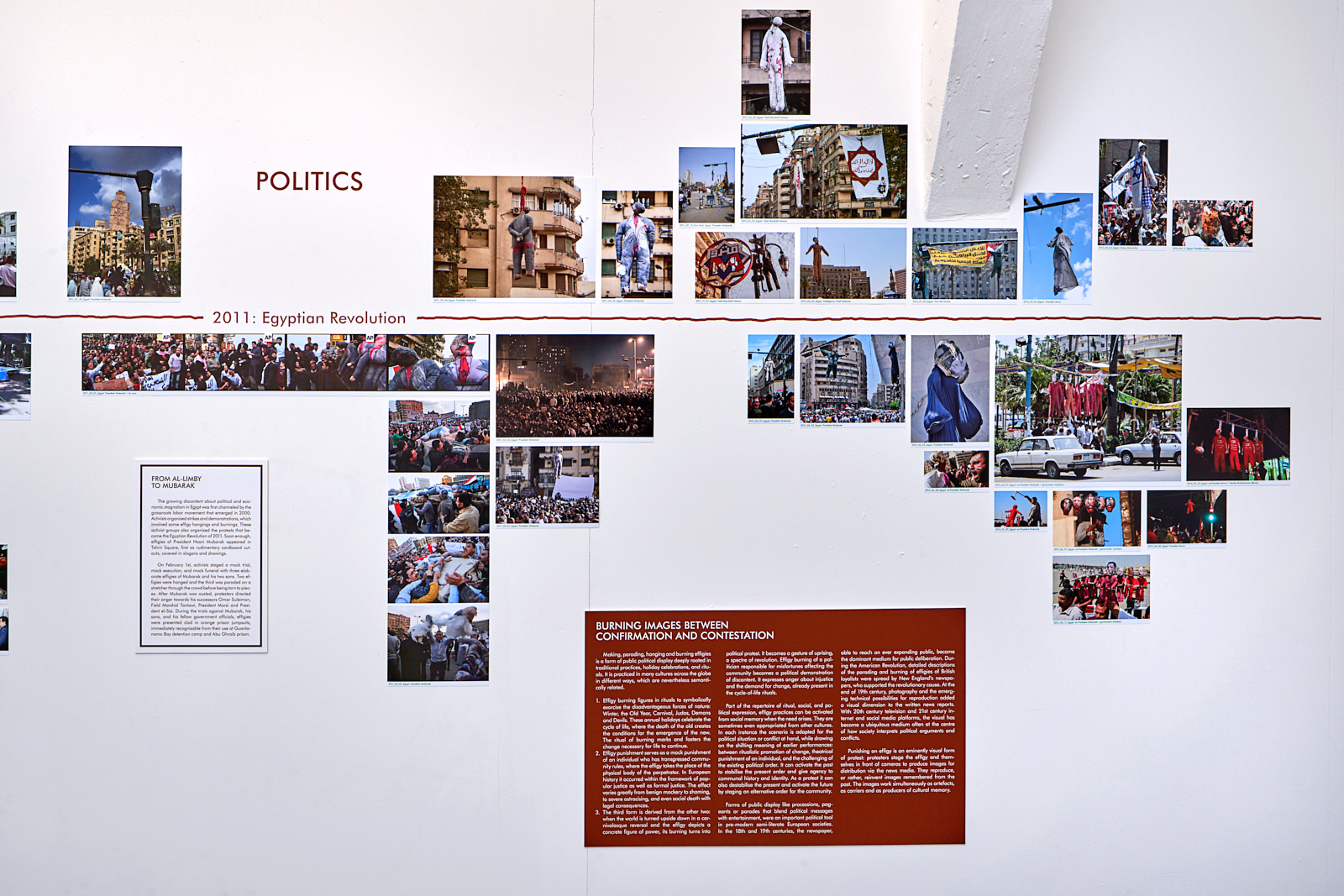
Burning Images Between Confirmation and Contestation
Making, parading, hanging and burning effigies is a form of public political display deeply rooted in traditional practices, holiday celebrations, and rituals. It is practiced in many cultures across the globe in different ways, which are nevertheless semantically related.
1: Effigy burning figures in rituals to symbolically exorcise the disadvantageous forces of nature: Winter, the Old Year, Carnival, Judas, Demons and Devils. These annual holidays celebrate the cycle of life, where the death of the old creates the conditions for the emergence of the new. The ritual of burning marks and fosters the change necessary for life to continue.
2: Effigy punishment serves as a mock punishment of an individual who has transgressed community rules, where the effigy takes the place of the physical body of the perpetrator. In European history it occurred within the framework of popular justice as well as formal justice. The effect varies greatly from benign mockery to shaming, to severe ostracising, and even social death with legal consequences.
3: The third form is derived from the other two: when the world is turned upside down in a carnivalesque reversal and the effigy depicts a concrete figure of power, its burning turns into political protest. It becomes a gesture of uprising, a spectre of revolution. Effigy burning of a politician responsible for misfortunes affecting the community becomes a political demonstration of discontent. It expresses anger about injustice and the demand for change, already present in the cycle-of-life rituals.
Part of the repertoire of ritual, social, and political expression, effigy practices can be activated from social memory when the need arises. They are sometimes even appropriated from other cultures. In each instance the scenario is adapted for the political situation or conflict at hand, while drawing on the shifting meaning of earlier performances: between ritualistic promotion of change, theatrical punishment of an individual, and the challenging of the existing political order. It can activate the past to stabilise the present order and give agency to communal history and identity. As a protest it can also destabilise the present and activate the future by staging an alternative order for the community.
Forms of public display like processions, pageants or parades that blend political messages with entertainment, were an important political tool in pre-modern semi-literate European societies. In the 18th and 19th centuries, the newspaper, able to reach an ever expanding public, became the dominant medium for public deliberation. During the American Revolution, detailed descriptions of the parading and burning of effigies of British loyalists were spread by New England’s newspapers, who supported the revolutionary cause. At the end of 19th century, photography and the emerging technical possibilities for reproduction added a visual dimension to the written news reports. With 20th century television and 21st century internet and social media platforms, the visual has become a ubiquitous medium often at the centre of how society interprets political arguments and conflicts.
Punishing an effigy is an eminently visual form of protest: protesters stage the effigy and themselves in front of cameras to produce images for distribution via the news media. They reproduce, or rather, reinvent images remembered from the past. The images work simultaneously as artefacts, as carriers and as producers of cultural memory.
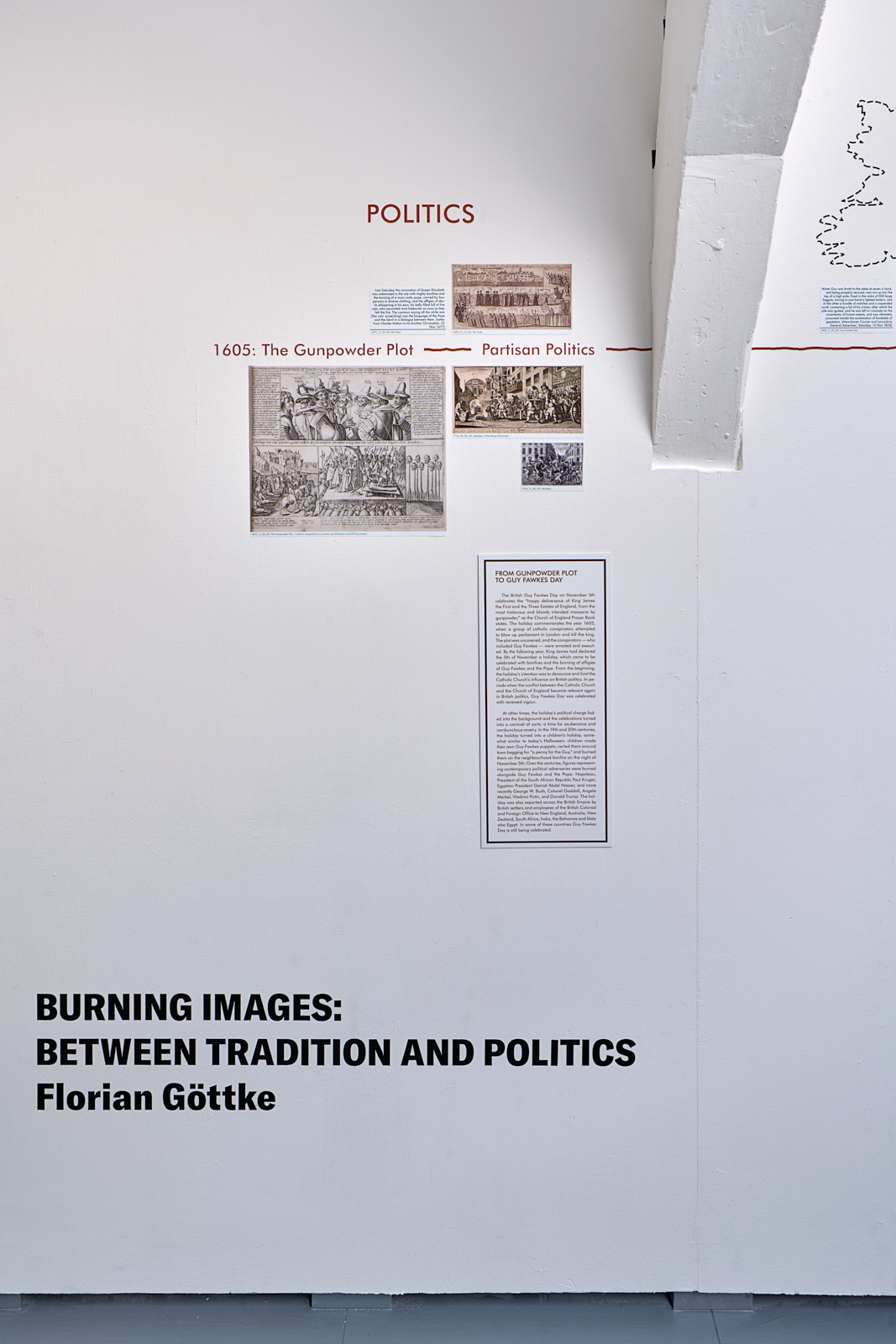
From Gunpowder Plot to Guy Fawkes Day
The British Guy Fawkes Day on November 5th celebrates the “happy deliverance of King James the First and the Three Estates of England, from the most traitorous and bloody intended massacre by gunpowder,” as the Church of England Prayer Book states. The holiday commemorates the year 1605, when a group of catholic conspirators attempted to blow up parliament in London and kill the king. The plot was uncovered, and the conspirators — who included Guy Fawkes — were arrested and executed. By the following year, King James had declared the 5th of November a holiday, which came to be celebrated with bonfires and the burning of effigies of Guy Fawkes and the Pope. From the beginning, the holiday’s intention was to denounce and limit the Catholic Church’s influence on British politics. In periods when the conflict between the Catholic Church and the Church of England became relevant again in British politics, Guy Fawkes Day was celebrated with renewed vigour.
At other times, the holiday’s political charge faded into the background and the celebrations turned into a carnival of sorts: a time for exuberance and rambunctious revelry. In the 19th and 20th centuries, the holiday turned into a children’s holiday, somewhat similar to today’s Halloween: children made their own Guy Fawkes puppets, carted them around town begging for “a penny for the Guy,” and burned them on the neighbourhood bonfire on the night of November 5th. Over the centuries, figures representing contemporary political adversaries were burned alongside Guy Fawkes and the Pope: Napoleon, President of the South African Republic Paul Kruger, Egyptian President Gamal Abdel Nasser, and more recently George W. Bush, Colonel Gaddafi, Angela Merkel, Vladimir Putin, and Donald Trump. The holiday was also exported across the British Empire by British settlers and employees of the British Colonial and Foreign Office to New England, Australia, New Zealand, South Africa, India, the Bahamas and likely also Egypt. In some of these countries Guy Fawkes Day is still being celebrated.
November Carnival in Lewes
In England, the town of Lewes in Sussex is currently at the center of contemporary Guy Fawkes Day celebrations. Organised by a number of competing bonfire societies, the participants march in costumes in fiery nighttime processions, carrying torches, and dragging burning barrels of tar. Big floats with figures of Guy Fawkes, the Pope, and other despised figures are pulled along the way and burned at the bonfire site. The holiday has become a tourist attraction, a carnival of sorts, which draws thousands to watch the spectacle.
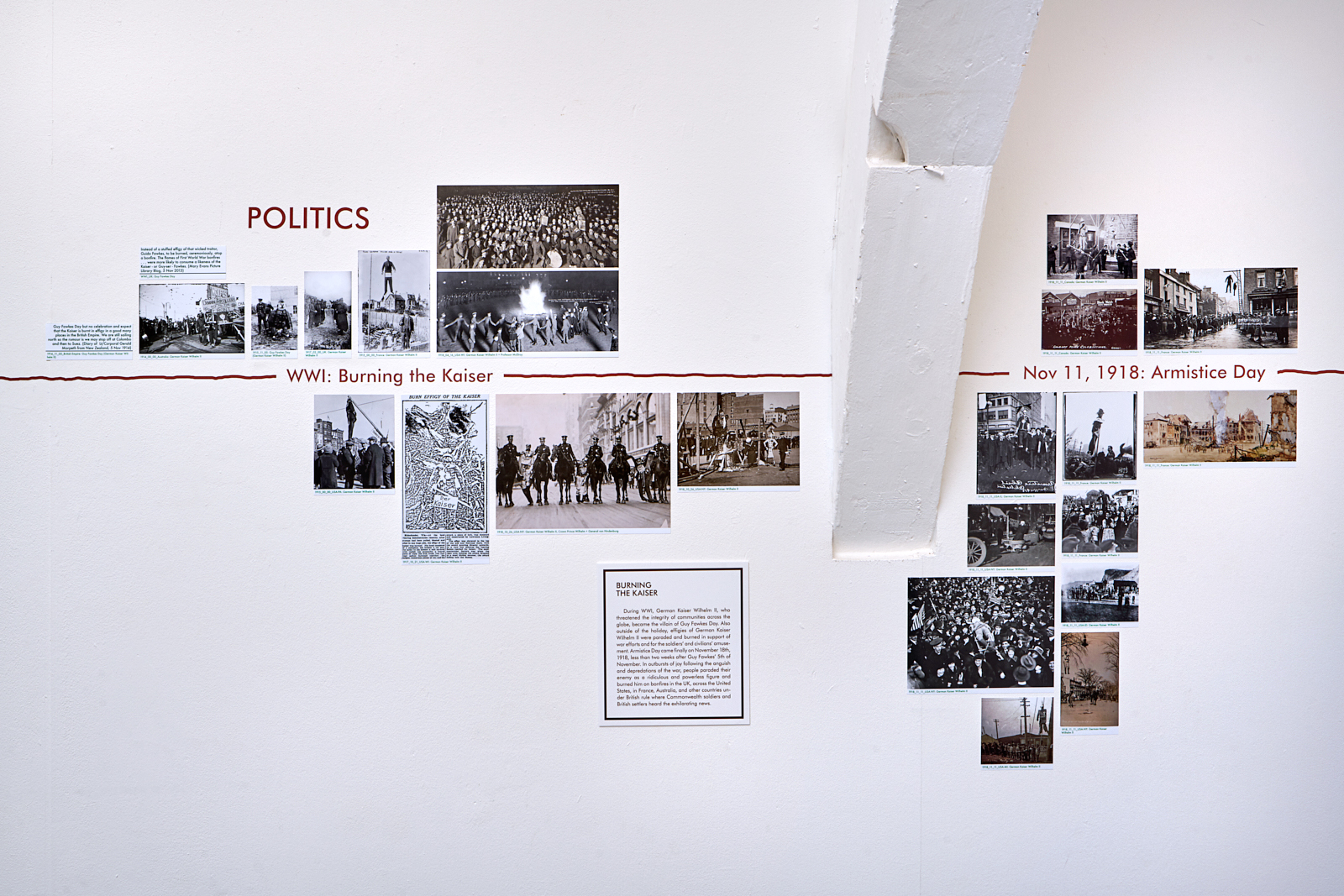
Burning the Kaiser
During WWI, German Kaiser Wilhelm II, who threatened the integrity of communities across the globe, became the villain of Guy Fawkes Day. Also outside of the holiday, effigies of German Kaiser Wilhelm II were paraded and burned in support of war efforts and for the soldiers’ and civilians’ amusement. Armistice Day came finally on November 18th, 1918, less than two weeks after Guy Fawkes’ 5th of November. In outbursts of joy following the anguish and depredations of the war, people paraded their enemy as a ridiculous and powerless figure and burned him on bonfires in the UK, across the United States, in France, Australia, and other countries under British rule where Commonwealth soldiers and British settlers heard the exhilarating news.
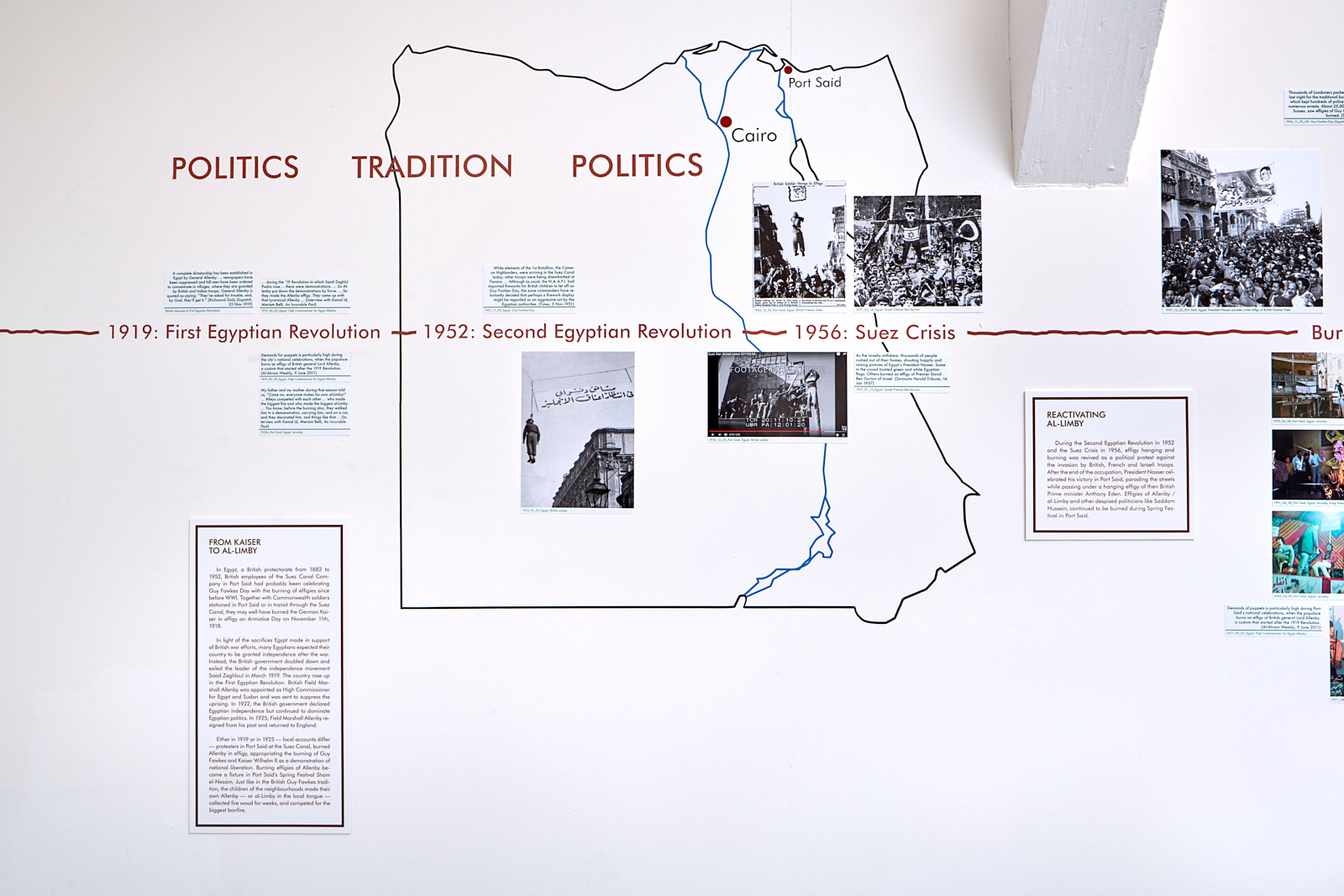
From Kaiser to al-Limby
In Egypt, a British protectorate from 1882 to 1952, British employees of the Suez Canal Company in Port Said had probably been celebrating Guy Fawkes Day with the burning of effigies since before WWI. Together with Commonwealth soldiers stationed in Port Said or in transit through the Suez Canal, they may well have burned the German Kaiser in effigy on Armistice Day on November 11th, 1918.
In light of the sacrifices Egypt made in support of British war efforts, many Egyptians expected their country to be granted independence after the war. Instead, the British government doubled down and exiled the leader of the independence movement Saad Zaghloul in March 1919. The country rose up in the First Egyptian Revolution. British Field Marshall Allenby was appointed as High Commissioner for Egypt and Sudan and was sent to suppress the uprising. In 1922, the British government declared Egyptian independence but continued to dominate Egyptian politics. In 1925, Field Marshall Allenby resigned from his post and returned to England.
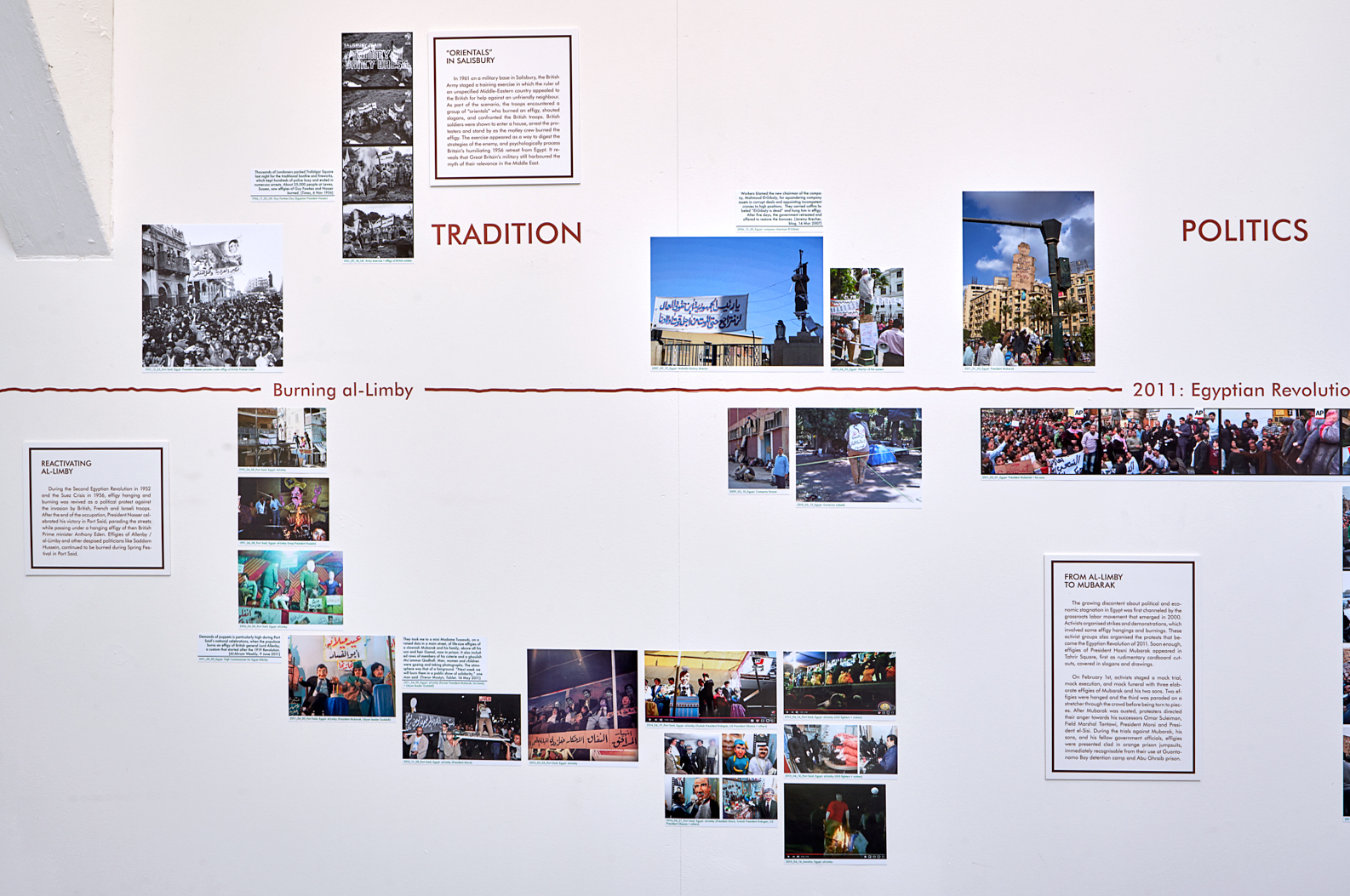
Either in 1919 or in 1925 — local accounts differ — protesters in Port Said at the Suez Canal, burned Allenby in effigy, appropriating the burning of Guy Fawkes and Kaiser Wilhelm II as a demonstration of national liberation. Burning effigies of Allenby became a fixture in Port Said’s Spring Festival Sham el-Nessim. Just like in the British Guy Fawkes tradition, the children of the neighbourhoods made their own Allenby — or al-Limby in the local tongue — collected fire wood for weeks, and competed for the biggest bonfire.
Reactivating al-Limby
During the Second Egyptian Revolution in 1952 and the Suez Crisis in 1956, effigy hanging and burning was revived as a political protest against the invasion by British, French and Israeli troops. After the end of the occupation, President Nasser celebrated his victory in Port Said, parading the streets while passing under a hanging effigy of then British Prime minister Anthony Eden. Effigies of Allenby/al-Limby and other despised politicians like Saddam Hussein, continued to be burned during Spring Festival in Port Said.
“Orientals” in Salisbury
In 1961 on a military base in Salisbury, the British Army staged a training exercise in which the ruler of an unspecified Middle-Eastern country appealed to the British for help against an unfriendly neighbour. As part of the scenario, the troops encountered a group of “orientals” who burned an effigy, shouted slogans, and confronted the British troops. British soldiers were shown to enter a house, arrest the protesters and stand by as the motley crew burned the effigy. The exercise appeared as a way to digest the strategies of the enemy, and psychologically process Britain’s humiliating 1956 retreat from Egypt. It reveals that Great Britain’s military still harboured the myth of their relevance in the Middle East.
From al-Limby to Mubarak
The growing discontent about political and economic stagnation in Egypt was first channeled by the grassroots labor movement that emerged in 2000. Activists organised strikes and demonstrations, which involved some effigy hangings and burnings. These activist groups also organised the protests that became the Egyptian Revolution of 2011. Soon enough, effigies of President Hosni Mubarak appeared in Tahrir Square, first as rudimentary cardboard cut-outs, covered in slogans and drawings.On February 1st, activists staged a mock trial, mock execution, and mock funeral with three elaborate effigies of Mubarak and his two sons. Two effigies were hanged and the third was paraded on a stretcher through the crowd before being torn to pieces. After Mubarak was ousted, protesters directed their anger towards his successors Omar Suleiman, Field Marshal Tantawi, President Morsi and President el-Sisi. During the trials against Mubarak, his sons, and his fellow government officials, effigies were presented clad in orange prison jumpsuits, immediately recognisable from their use at Guantanamo Bay detention camp and Abu Ghraib prison.